
The Secret Cycle Behind Kitten Season
by Wendi Piscia | April 7th, 2026 | 2:30 pm
You might hear a soft squeak under a deck, behind a shed, or in the corner of a vineyard. It is easy to think the kittens have just appeared out of nowhere. In reality, the first signs of kitten season start months before anyone sees the tiny paws or hears the mews. Understanding this timing is one of the best ways to protect both cats and the community.
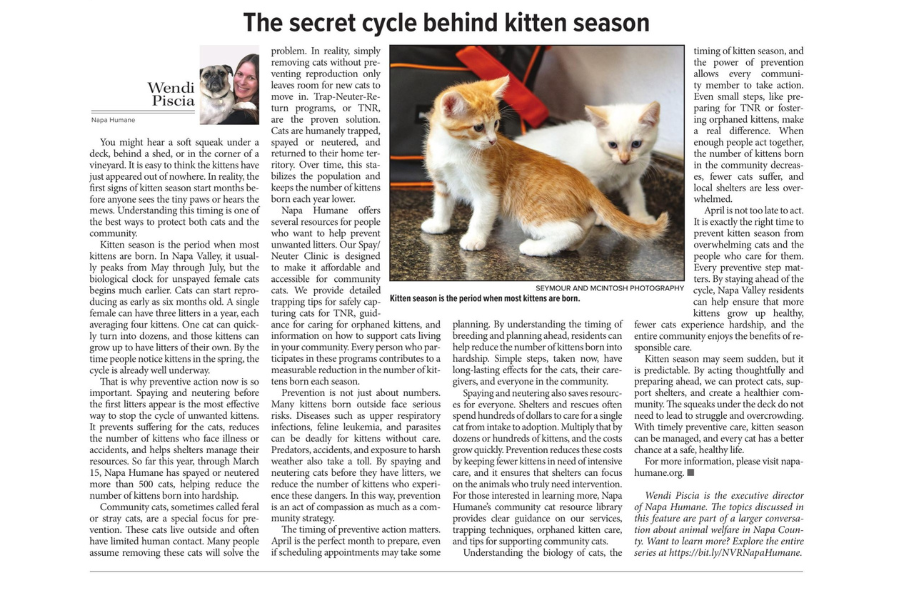
Kitten season is the period when most kittens are born. In Napa Valley, it usually peaks from May through July, but the biological clock for unspayed female cats begins much earlier. Cats can start reproducing as early as six months old. A single female can have three litters in a year, each averaging four kittens. One cat can quickly turn into dozens, and those kittens can grow up to have litters of their own. By the time people notice kittens in the spring, the cycle is already well underway.
That is why preventive action now is so important. Spaying and neutering before the first litters appear is the most effective way to stop the cycle of unwanted kittens. It prevents suffering for the cats, reduces the number of kittens who face illness or accidents, and helps shelters manage their resources. So far this year, through March 15, Napa Humane has spayed or neutered more than 500 cats, helping reduce the number of kittens born into hardship.
Community cats, sometimes called feral or stray cats, are a special focus for prevention. These cats live outside and often have limited human contact. Many people assume removing these cats will solve the problem. In reality, simply removing cats without preventing reproduction only leaves room for new cats to move in. Trap-Neuter-Return programs, or TNR, are the proven solution. Cats are humanely trapped, spayed or neutered, and returned to their home territory. Over time, this stabilizes the population and keeps the number of kittens born each year lower.
Napa Humane offers several resources for people who want to help prevent unwanted litters. Our Spay/Neuter Clinic is designed to make it affordable and accessible for community cats. We provide detailed trapping tips for safely capturing cats for TNR, guidance for caring for orphaned kittens, and information on how to support cats living in your community. Every person who participates in these programs contributes to a measurable reduction in the number of kittens born each season.
Prevention is not just about numbers. Many kittens born outside face serious risks. Diseases such as upper respiratory infections, feline leukemia, and parasites can be deadly for kittens without care. Predators, accidents, and exposure to harsh weather also take a toll. By spaying and neutering cats before they have litters, we reduce the number of kittens who experience these dangers. In this way, prevention is an act of compassion as much as a community strategy.
The timing of preventive action matters. April is the perfect month to prepare, even if scheduling appointments may take some planning. By understanding the timing of breeding and planning ahead, residents can help reduce the number of kittens born into hardship. Simple steps, taken now, have long-lasting effects for the cats, their caregivers, and everyone in the community.
Spaying and neutering also saves resources for everyone. Shelters and rescues often spend hundreds of dollars to care for a single cat from intake to adoption. Multiply that by dozens or hundreds of kittens, and the costs grow quickly. Prevention reduces these costs by keeping fewer kittens in need of intensive care, and it ensures that shelters can focus on the animals who truly need intervention. For those interested in learning more, Napa Humane’s community cat resource library provides clear guidance on our services, trapping techniques, orphaned kitten care, and tips for supporting community cats.
Understanding the biology of cats, the timing of kitten season, and the power of prevention allows every community member to take action. Even small steps, like preparing for TNR or fostering orphaned kittens, make a real difference. When enough people act together, the number of kittens born in the community decreases, fewer cats suffer, and local shelters are less overwhelmed.
April is not too late to act. It is exactly the right time to prevent kitten season from overwhelming cats and the people who care for them. Every preventive step matters. By staying ahead of the cycle, Napa Valley residents can help ensure that more kittens grow up healthy, fewer cats experience hardship, and the entire community enjoys the benefits of responsible care.
Kitten season may seem sudden, but it is predictable. By acting thoughtfully and preparing ahead, we can protect cats, support shelters, and create a healthier community. The squeaks under the deck do not need to lead to struggle and overcrowding. With timely preventive care, kitten season can be managed, and every cat has a better chance at a safe, healthy life.